
What can ERP do to support your manufacturing quality control department?
Your quality control department might have many needs that your current ERP system just doesn't support. Some users have developed off-line, work-around solutions, but they would prefer a process integrated with their ERP.
Quality departments need to manage compliance with external and internal requirements. An ERP quality management module can connect quality processes with purchasing, production, inventory, customer requirements and reporting.
Meeting customer requirements
Discrete manufacturers make products from individual components and customers may specify some of those components; one might require a particular part number from a named manufacturer, while another might accept a choice of items from an approved supplier list.
Your business should be able to rely on its ERP to control purchases. If you are making an SKU for customer A, the ERP system may develop planned purchases, but buyers still need to order the item specified by that customer.
Customer B might need the same item without specifying a particular manufacturer or model. In that case, you may be able to use the same component as customer A or choose a less expensive option.
The part could be a generic item, such as a ¼–20 x 5/8 screw, but only a certain manufacturer’s screw may be acceptable for customer A. If your ERP doesn't keep these requirements separate, buyers may order the wrong component.
Quality means delivering what customers need, including requirements they may not state explicitly.
Meeting internal requirements
Another area that ERP systems can help with is meeting your own compliance requirements. For example, manufacturers have assembly instructions parallel to ERP routings.
The instructions might say to slide the right side of a part into the tabs on another part and screw them together. The next step in the operation is to do the same for the left side.
However, you may not know whether the shop floor employee assembled the piece on the right and then the left or the other way around. It may not make a difference, but quality processes require you to make every product the same way every time to ensure repeatability.
There may also be a good reason to assemble the piece from the left and then the right, but you will never know without documenting the precise operations on the shop floor.
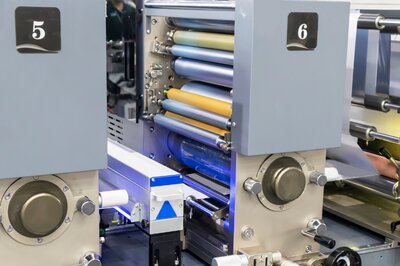
As well as the aforementioned benefits, a quality management module can support inspection planning, define quality criteria and document quality-related processes. It may also help teams record defects, track corrective actions and use quality data to improve processes.
Reporting for quality control
Businesses can use the reporting capabilities of ERP systems to help with external reporting. Every organization that asks for data requires its own format, even though the data might be very similar.
Upgrading your legacy ERP system can really help because the business intelligence applications available today are vastly improved over those available in the past. Integrated ERP data can give quality teams and other departments a shared view of inspections, production information, inventory and quality issues.

Free white paper
Top 10 Manufacturing ERP Software Comparison
Compare the best manufacturing ERP systems
Related articles
-
7 KPIs your process manufacturing ERP should track
Discover the seven key performance indicators that you should be tracking your process manufactur...
-

Secret KPI: Why Your ERP Implementation Team Matters More Than Software
Learn how Godlan ensures successful ERP implementation for manufacturers with proven strategies &...
-

3 New Year's Resolutions for Your Discrete Manufacturing ERP Project
Getting the best from your manufacturing ERP for the new year.